The Invisible Threat Facing Visible Leaders

A gazelle grazing on the Serengeti knows the cheetah is a threat. It doesn’t need a formal risk assessment to recognize the danger. Its nervous system detects and responds to immediate danger. Its survival depends on recognizing such threats.
We have similar wiring. When someone is angry or threatening, we sense danger. If our environment feels unsafe, our instincts alert us. And like the cheetah, our survival can depend on recognizing threats. But we are far from the ancient conditions that shaped those instincts. Danger is no longer limited to a nearby predator or a sudden change in our environment. For leaders and notable figures, danger often lurks in a blind spot our instincts never evolved to detect.
Leaders and notable figures have faced violence and harassment throughout history. This often happens not due to personal interactions, but because of wealth, decisions, views, authority, or links to specific causes, institutions, or beliefs. This risk of danger is typically impersonal and indirect. So, it falls outside the threats humans evolved to notice. As a result, it is often overlooked or underestimated by the very people exposed to it.
When UnitedHealthcare CEO Brian Thompson was murdered, he had no known ties to his killer or the company. His murderer targeted Thompson because of what he represented. Through that lens, Thompson’s humanity was stripped and replaced with a narrative of corporate greed and a healthcare system that is a source of anger and frustration for many Americans.
When Charlie Kirk was murdered, he likewise had no known personal connection to his attacker. Evidence suggests the act was motivated by ideology and opposition to Kirk’s views. Like Thompson, Kirk was no longer viewed as a husband, father, or even human. Instead, he became a symbol of the beliefs his attacker rejected.
These most recent assassinations show that violence often stems from ideology, not personal conflict or dangerous environments. In both instances, the attacker was unknown to the victim before the attack. This pattern aligns with assassination research showing that most lethal attackers don’t make direct threats to their targets.
In today's world, the scale and speed of modern visibility intensify this risk. A 24-hour news cycle and social media can quickly spotlight both famous and lesser-known individuals alike. This viral attention is often accompanied by provocative or unflattering narratives. And in our digital world, a motivated attacker can quickly gather intelligence and plan an attack using just a few keystrokes and internet access.
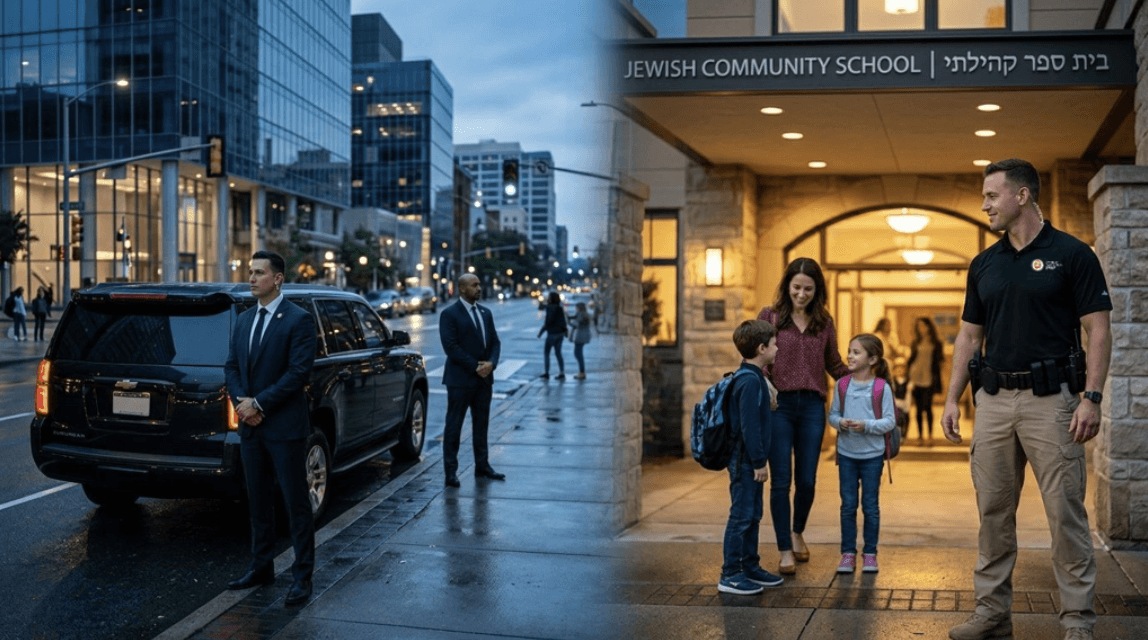
In this era of increasingly divisive social, political, and religious narratives, it is critical for leaders and their teams to understand their potential exposure to this form of targeting. Although the gazelle does not need a risk assessment to understand the threat posed by a cheetah, leaders and notable figures often do. Because risk isn’t always instinctual. And when instinct is unreliable, risk assessment is the only reliable tool to illuminate the blind spots, reveal the biases, and evaluate the threat. At Omnium, we help clients understand that risk.